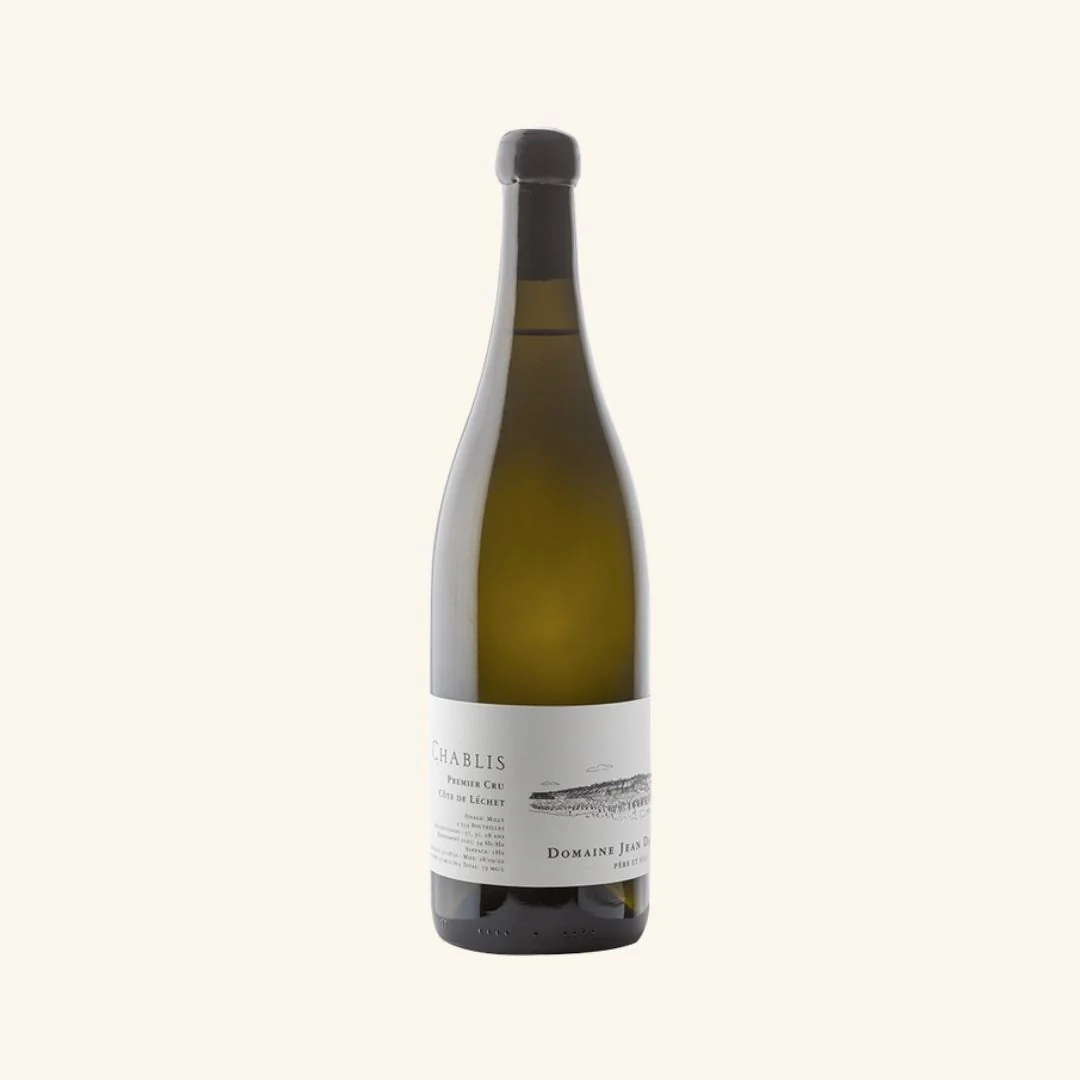
Domaine Jean Dauvissat Père & Fils Premier Cru Côte de Léchet 2023
In their words - Côte de Léchet is exposed south-east and dominates the village of Milly. Its 38% of hills in full sun exposure, the poor and very rocky underground results in small production and wines with great minerality. Chablis at its purest!
Vintage starts with a mild winter. Followed by a little spring frost luckily without too much damage. A humid and moody forecast is installed by April. This will last during May and June and need constant supervision. The grapes are closing in July and give room for a dry summer. Despite the drought the quantity is present at harvest that started on September 11th lasting about 10 days.
After a long pressing and static settling of 12-24 hours, fermentation occurred at 20 degrees celsius using natural yeasts.
A malo-lactic fermentation was followed by a long maturation on fine lees. A light treatment and filtration were necessary to obtain a clear and stable wine. This wine has not been treated with cold to preserve aromatic finesse.
Original: $109.12
-70%$109.12
$32.74Product Information
Product Information
Shipping & Returns
Shipping & Returns
Description
In their words - Côte de Léchet is exposed south-east and dominates the village of Milly. Its 38% of hills in full sun exposure, the poor and very rocky underground results in small production and wines with great minerality. Chablis at its purest!
Vintage starts with a mild winter. Followed by a little spring frost luckily without too much damage. A humid and moody forecast is installed by April. This will last during May and June and need constant supervision. The grapes are closing in July and give room for a dry summer. Despite the drought the quantity is present at harvest that started on September 11th lasting about 10 days.
After a long pressing and static settling of 12-24 hours, fermentation occurred at 20 degrees celsius using natural yeasts.
A malo-lactic fermentation was followed by a long maturation on fine lees. A light treatment and filtration were necessary to obtain a clear and stable wine. This wine has not been treated with cold to preserve aromatic finesse.